

SafeSteps
SafeSteps is a user-centered redesign of the personal fall alarm for the elderly. Moving away from the clinical and stigmatizing design of traditional wristbands and pendants, SafeSteps integrates advanced fall detection technology into a familiar, everyday object: a pair of slippers. The solution is designed not just to provide safety, but to preserve the user's sense of self, independence, and comfort in their own home.
The Problem
Current fall alarm systems, while functionally effective, suffer from low user adoption and inconsistent use. Our initial research, including interviews with elderly users, relatives, home care professionals, and a leading alarm manufacturer (Cekura), uncovered a deep disconnect between the product and the user's life.
Two Critical Problems Emerged:
Stigma and Vanity
The devices are often clinical and sterile in appearance. They act as a constant, visible reminder of fragility and dependence, leading many to reject them. As one expert informant noted:
“The elderly don't want to walk around with things that look like they came from a hospital.”
Forgetting and Disruption
The alarms are typically wristbands or necklaces that must be put on and taken off. This disrupts established routines and is easily forgotten, especially during the night, a time when falls are common. This tragic reality was highlighted by a relative whose mother passed away after a fall:
“The day she fell and died, she was supposed to go to bed and had placed the alarm on her nightstand... she fell in the middle of the room without the fall alarm and had no way to move or call for help. If she had kept it on, the accident wouldn't have happened.”
These insights revealed that the most significant design flaw wasn't in the technology itself, but in its failure to account for human psychology and daily life.
Research & Discovery
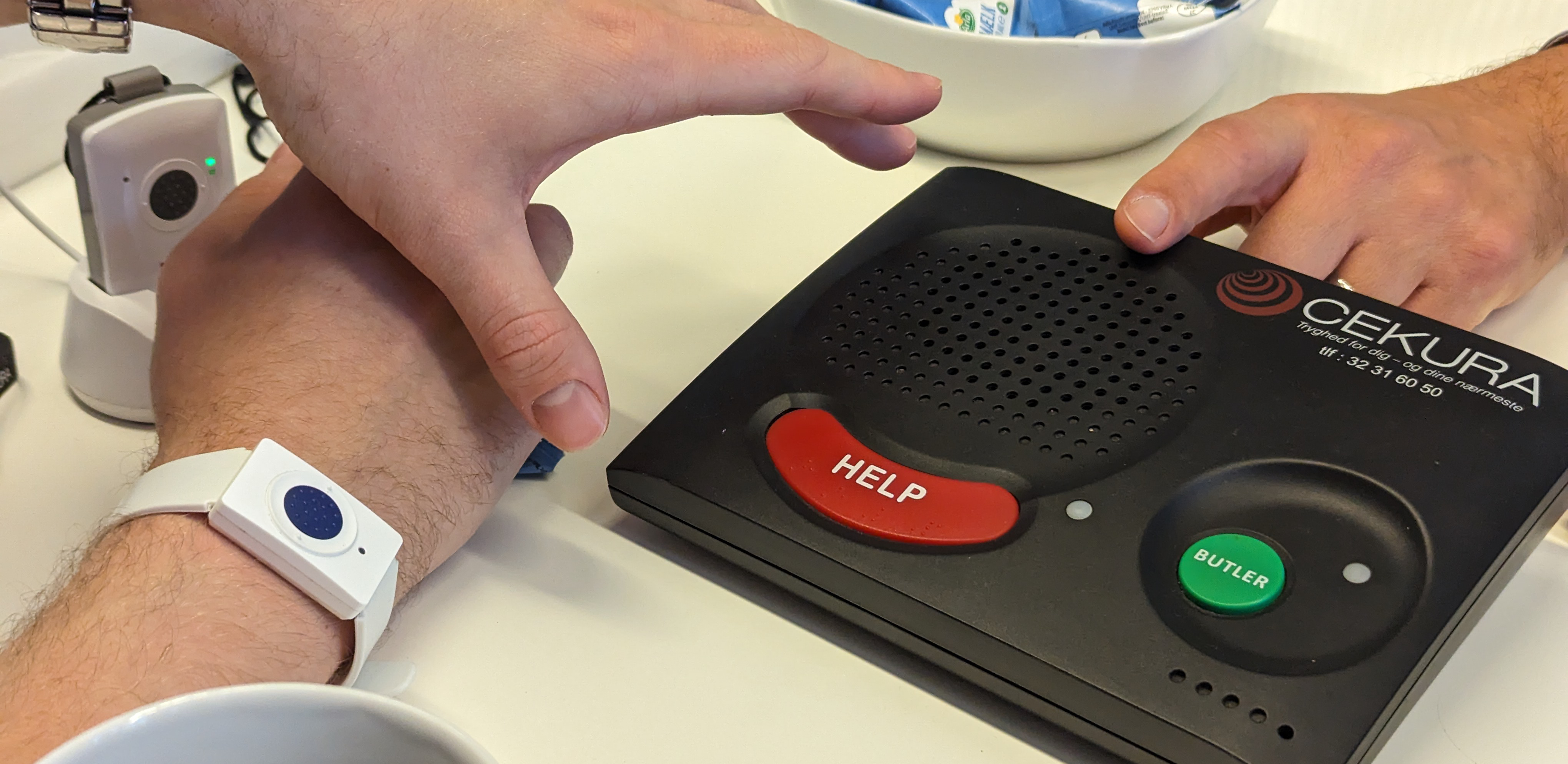
Some of the existing solutions for fall alarms we explored in collaboration with the manufacturer Cekura.
Understanding the Users
We began with extensive qualitative research to understand the full ecosystem of the fall alarm. We conducted semi-structured interviews and ethnographic observations with key stakeholders:
- Elderly Users: To understand their lived experiences, fears, and daily routines
- Relatives: To learn about their concerns, involvement, and observations
- Home Care Staff & Experts: To gain insight into emergency situations and real-world usage patterns
- A Manufacturer (Cekura): To understand the business and technical constraints of current products
Key Insights from Thematic Analysis
- Aesthetics Matter: Users who are still active and social avoid alarms that signal "sickness" or "weakness"
- Habits are Hard to Change: Adding a new step to a lifelong routine (like putting on a device) is a major point of failure
- Independence is Paramount: Users fear losing their autonomy and becoming a burden. Technology should empower them, not confine them
- The "Night Problem": Many falls happen at night when users get up to use the bathroom and have taken off their alarms for comfort
Design Process
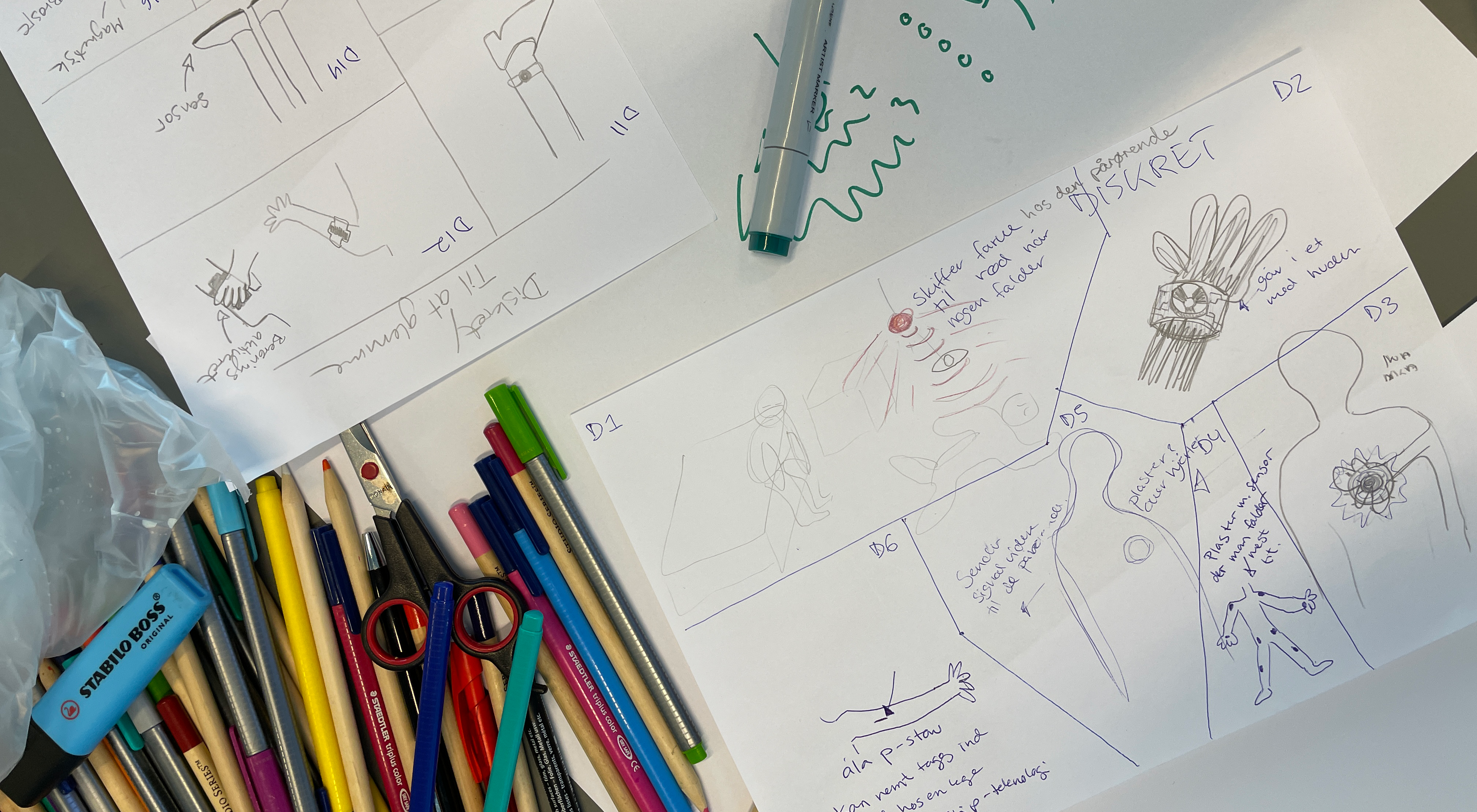
Sketches from the ideation process for SafeSteps. The team looked at different scenarios and different ways to trigger the alarm.
Definition & Ideation
To give our insights structure, we utilized the "Fall Typologies" framework by researcher Lotte Evron. This helped us move beyond a monolithic view of "the elderly" and design for specific mindsets:
- The Actor: Vain and concerned with appearances. Needs a discreet, aesthetically pleasing solution
- The Patient: Prioritizes safety and functionality but struggles with memory. Needs a solution that is easy to remember and use
- The Rebel: Values autonomy above all. Needs a non-intrusive solution that doesn't feel like a compromise on their lifestyle
With these personas in mind, we held a series of collaborative sketching and brainwriting workshops. We focused on our design criteria of "the product must be unforgettable", meaning it should be something the user would never forget to use. This led us to a core strategic insight: instead of introducing a new object, we should embed the technology within an object that is already part of the user's daily habit. After a few brainstorming sessions where several ideas were proposed, the decision was made: slippers.
Prototyping & Evaluation
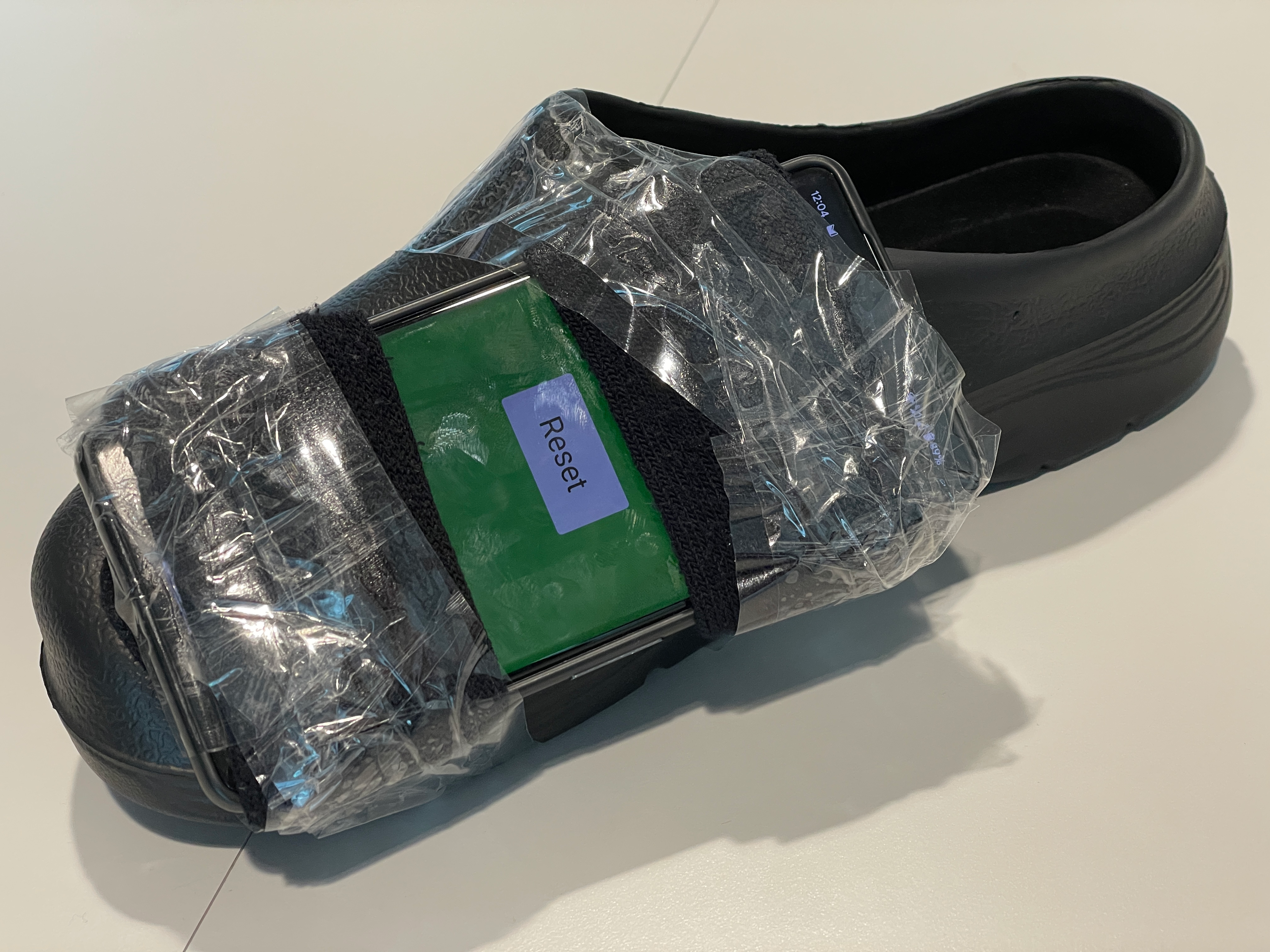
The prototype of the SafeSteps system, a slipper with a smartphone taped to the slipper running custom code.
We built a low-fidelity, functional prototype to test our concept. We used a pair of foam slippers, a smartphone with an accelerometer, and custom code to simulate fall detection and trigger an audio response through the phone's speaker.
Our evaluation method was enactment, where we physically acted out critical user scenarios to test the concept's logic and user experience. This quickly revealed a couple of edge cases:
- Falling before putting the slippers on (e.g.,falling while getting out of bed)
- Falling while unconscious, without the slippers on
With this in mind we made the following iterations:
- We added voice activation ("Help!"), allowing the user to call for aid even if they aren't wearing the slippers
- We added a passive inactivity timer that triggers an alarm if the user doesn't put on their slippers for a set period after waking up
The Solution
SafeSteps is a smart slipper system that offers robust fall protection without compromising on comfort or dignity. It is designed to be a seamless part of the user's home life.
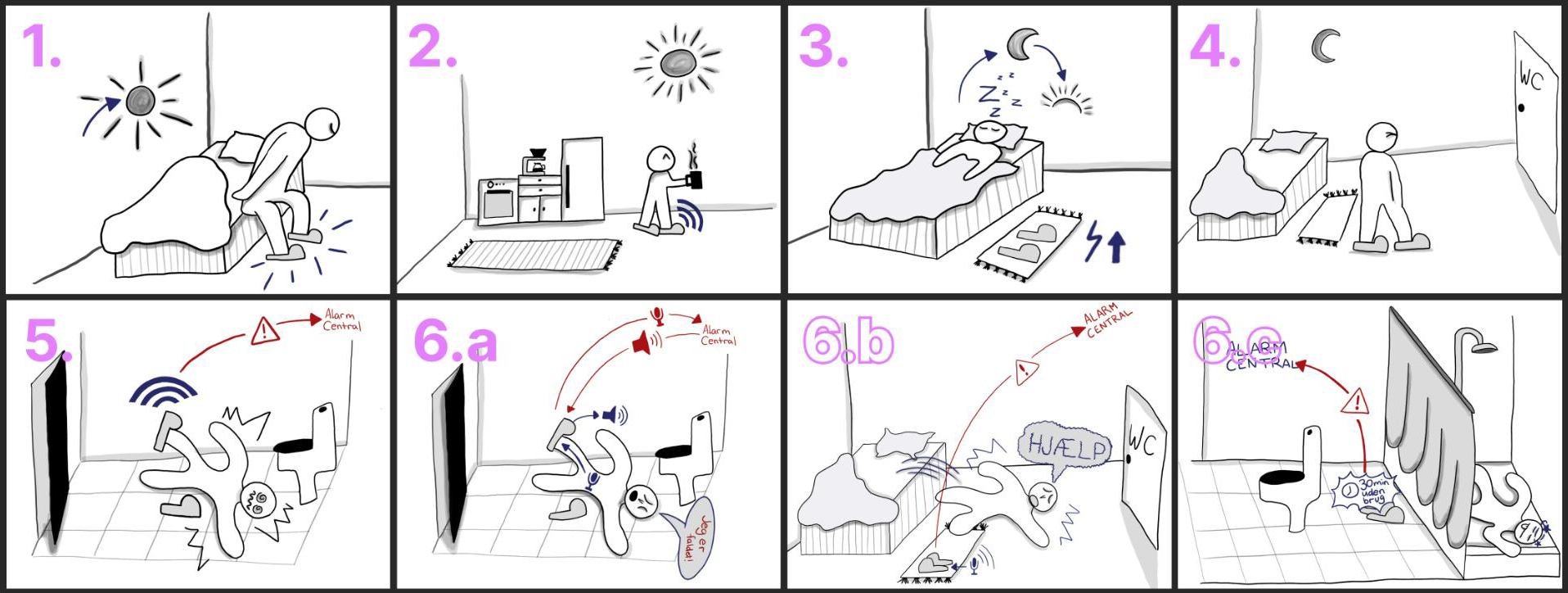
Visualization of the finalized version of the user journey and flow for SafeSteps.
Key Features
Discreet by Design
- The technology is completely hidden within the sole of a comfortable, customizable slipper
- Removes the social stigma of wearing a medical device
- Maintains the user's sense of dignity and independence
Automatic Fall Detection
- An integrated accelerometer detects a fall and automatically calls the emergency response center
- Advanced algorithms distinguish between falls and normal activities
Two-Way Communication
- A built-in microphone and speaker allow the user to speak directly with the operator
- Users can confirm the emergency or cancel a false alarm
Multi-Modal Activation
- Automatic triggering by fall detection
- Manual activation by voice command ("Help!")
- Passive activation through inactivity timer
- Ensures coverage in various scenarios
Seamless Integration into Habits
- By embedding the alarm in slippers, often the first thing put on in the morning and the last thing taken off at night, the system becomes an unforgettable part of the user's routine
Effortless Charging
- The slippers charge wirelessly when placed on a designated floor mat
- Ideally located by the bed or front door for convenience
Design Decisions & Rationale
Why Slippers?
Slippers are already part of the user's daily routine. It's the first thing put on in the morning and the last thing taken off at night. By embedding the technology in this familiar object, we eliminate the need to remember to wear a separate device.
Why Focus on Aesthetics?
Our research showed that stigma and vanity are major barriers to adoption. By making the technology "invisible" and the slippers customizable, we address the psychological barriers that prevent users from adopting traditional fall alarms.
Why Multiple Activation Methods?
Real-world scenarios are complex. Users might fall before putting on slippers, or while unconscious. By providing multiple ways to trigger the alarm, we ensure a comprehensive coverage for various emergency situations.
Results & Impact
Immediate Outcomes
- Eliminated stigma barriers by hiding technology in familiar objects
- Addressed the "night problem" through seamless integration into bedtime routines
- Improved user adoption by removing the need to remember to wear a device
- Enhanced safety coverage through multiple activation methods
Prototype Validation
Through enactment testing, we validated that the concept addresses the core user needs while maintaining the technical functionality required for fall detection and emergency response.
Challenges & Learnings
Designing for Vulnerable Users
Working with elderly users required sensitivity to their concerns about independence and dignity. We learned to:
- Prioritize psychological comfort alongside technical functionality
- Design for established habits rather than trying to change behavior
- Address stigma and vanity concerns as core design requirements
- Consider the full context of daily life, not just emergency scenarios
Technical Considerations
Embedding technology in slippers raised questions about durability, comfort, and maintenance that would require further development with materials and engineering experts.
The Power of Enactment
The enactment method proved invaluable for discovering edge cases and design flaws that traditional usability testing might miss, particularly for complex emergency scenarios.
Reflection
The SafeSteps project reinforced the critical importance of designing for the full human experience. The most successful technology isn't just functional, it's empathetic. It understands our habits, our fears, and our desire to live with dignity.
For vulnerable users, psychosocial factors like stigma and independence are just as important as technical functionality. The process of enactment also proved to be an invaluable tool for discovering design flaws that traditional usability testing might miss.
If this project were to continue, the next steps would be to develop a higher-fidelity prototype with a focus on materials and aesthetics, followed by in-home user testing with our target demographic over a longer period to gather qualitative data on comfort, reliability, and emotional response.